

LINKS CURRICULUM
Build Independence Beyond the Classroom
The Links® Curriculum is a comprehensive, research-based program (Arick, Hoffman & Magee-Arick, 2012) that fosters student independence in natural environments while aligning with Alternate Standards. Ideal for middle school, high school, and post-secondary students.
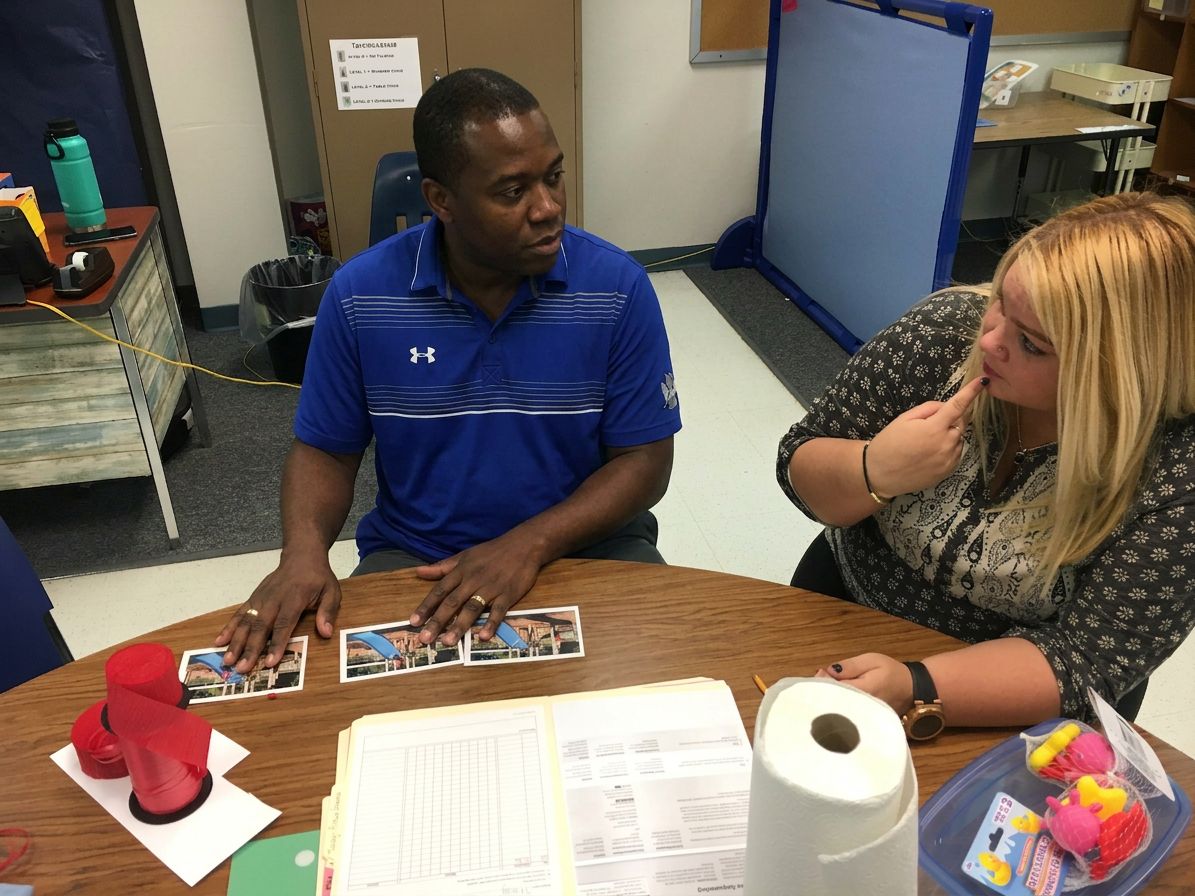

Why Choose Links?
The Links® Curriculum helps secondary students build real independence. By combining assessment, structured routines, and academic instruction, it promotes skill generalization across school, home, community, and work settings.
01

Rotating Content Units
Routine teaching units for daily life PLUS academic units in areas including math, language arts, vocational, vocabulary, life skills, science, and social studies.
02
Individualized Routines
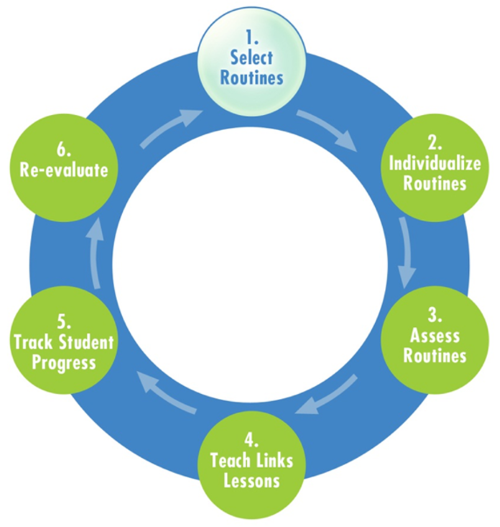
Task-analyzed routines tailored to meet each student's specific needs and learning goals.
03
Comprehensive Assessment
Online assessment systems for tracking progress with detailed reporting and data visualizations.
04
Visual Support Library
Hundreds of ready-to-go visuals make classroom implementation easy from day one.
05
IEP-Driven Instruction
Designed from the ground up to support and document IEP goal mastery.
06
Built for Generalization
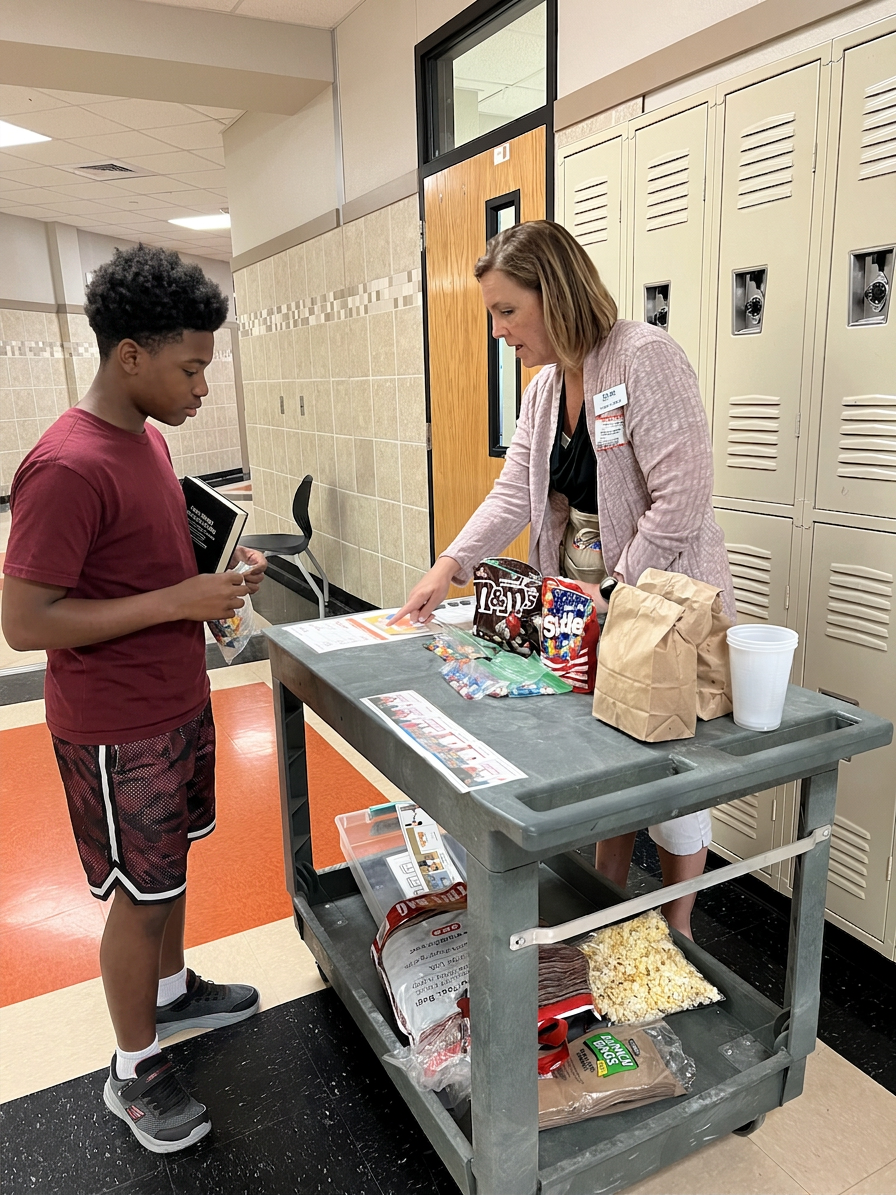
Skills practiced in school, home, and community contexts for true generalization.
WHAT'S INCLUDED
A complete special-education toolkit
Links® combines comprehensive assessment with structured instruction — delivered through both online and print materials — to support students with autism and other developmental disabilities. Research shows that students using the Links® Curriculum reliably generalize skills from instruction settings to community and home settings.
Online assessment systems for tracking progress
Visual support materials for easy implementation
Routine and academic teaching units
Structured supports for community and home
Evidence Basis for the Links Curriculum
Sourced from the National Research Council (2001); the National Professional Development Center on Autism Spectrum Disorder (2014); and Snell & Brown (2006).
01
Instructional Methods
Independence
Self-Determination
Functional and Generalizable Skills
02
Content of Instruction
School and Community Routines
Responding to Others
Communicating with Others
Functional Academics
Engaging in Diverse Activities
Social Skills
03
Principles of Applied Behavior Analysis
Task Analysis (i.e. Functional Routines)
Self-Management Techniques
Modeling/Imitation Strategies
Structured Work Systems
Prompting Strategies
04
Antecedent-Based Strategies
Discrete Trial Training
Visual and Environmental Supports
Positive Behavior Strategies and Supports
Augmentative Communication Systems
Joint Attention
Reinforcement
Peer-Mediated Instruction
Research on the Links Curriculum
STUDENT OUTCOME STUDY
Implementation of the Links Curriculum: Study of Student Independence During Routines
A study published in the Links Implementation Manual (Arick, Hoffman, & Magee-Arick, 2012) examined outcomes for students with moderate to severe disabilities using the Links Curriculum. Instructors from across the United States implemented a structured pre-post assessment protocol to measure students' independence in functional and community routines. Results showed that 90% of students made measurable gains in independence, demonstrating that the Links Curriculum is an effective, evidence-based approach for building real-world skills in natural environments.
RELIABILITY & VALIDITY
Reliability and Validity of the Links Routine Assessment and Development System
A large-scale field test conducted for the Oregon Department of Education (Arick, Hoffman, & Nave, 2000) evaluated the reliability and validity of the assessment system used in the Links Curriculum. The study involved 30 school districts, 133 instructors, and 478 students with moderate to severe disabilities, one of the largest validation studies of its kind. Results confirmed that the Links assessment system is a highly reliable and valid tool for measuring student independence, giving educators confidence that the data it produces accurately reflects real student progress.
Learn how the Links Curriculum can support your teachers and students
Tell us a bit about your role and we'll set up a walkthrough with classroom-specific examples.
Each month you'll receive:
Free, ready-to-use classroom resources
Expert tips and implementation strategies
Practical ideas to increase student engagement and learning