

Classroom Strategies
.
September 2026
Room Full of Peers: Building Social Connections in the First Weeks of School
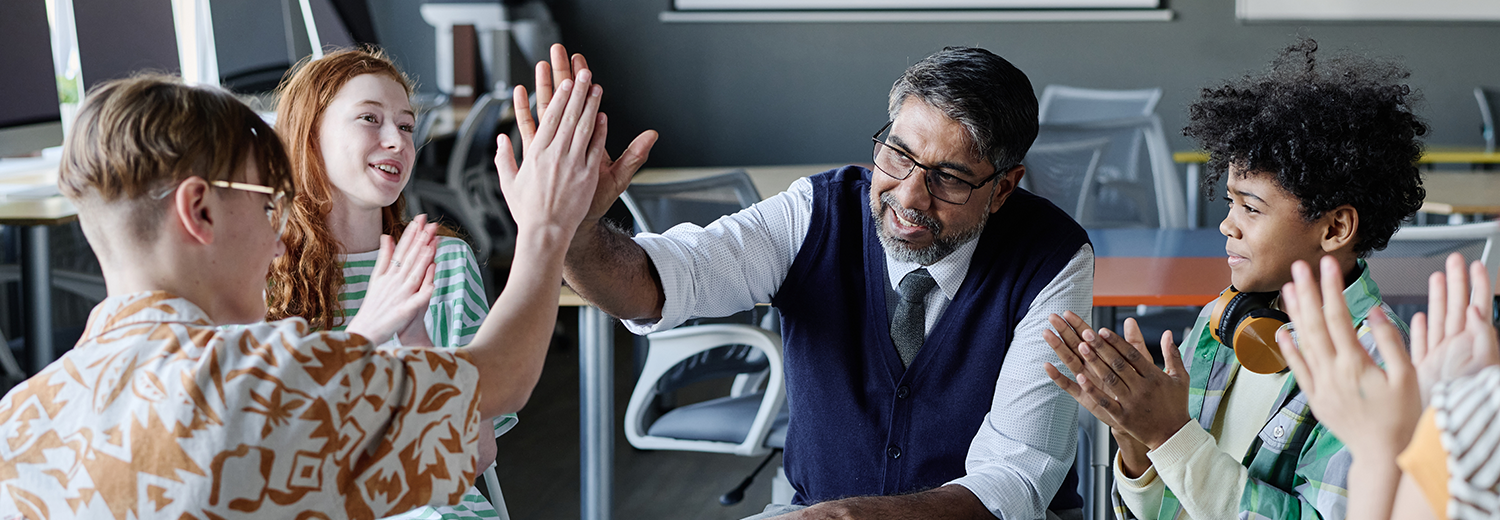
Peer connection is not something that simply happens once routines are in place; it is a skill that can be taught. Greetings, listening, turn-taking, asking someone to play, and knowing who is who in the room are all teachable and practicable. They are also easier to build now, while routines are still forming and small adjustments are still simple to make. At STAR Autism Support, we know that many students need direct, structured support to engage with peers, and that the students around them benefit just as much from learning how to include others.
This month, we are sharing practical peer-support routines, free resources you can print and use this week, and a simple early-year check-in to help you strengthen what is already working.
Start With the Smallest Interactions
Greetings are the front door to social connection. They happen dozens of times a day in classrooms, hallways, and community settings, so practicing them directly gives students a reliable, repeatable way in. Knowing a peer’s name and being able to say hello is often the difference between standing near a group and being part of it.
- Practice greetings and conversation openers with the SOLER Greetings Scenario Cards (English | Español).
- Teach the listening side of a conversation with this SOLER Listening skill worksheet — quiet voice, still body, eyes on the speaker, wait until they finish.
- Help students learn who is who with Find a Friend from Themes First! (English | Español). Students draw a descriptor card, find the peer who matches, and give a high five. For students who need more support, swap the descriptor cards for photos of classmates.
- If students are still learning peer names, teach greetings directly using the discrete trial techniques in STAR and Links.
- Build a small bank of go-to openers and closers students can reuse: “What did you do this weekend?” “Can I sit here?” “See you later!”
Give the Connection a Structure
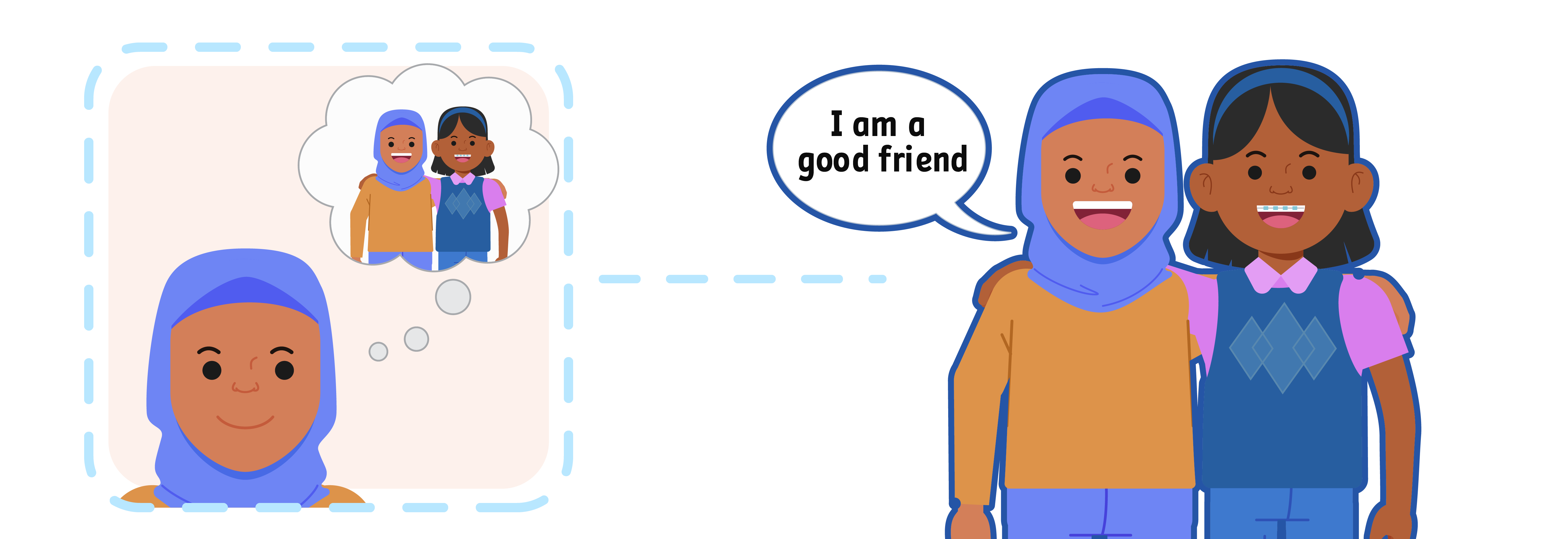
Friendship is a complex, sometimes intimidating process for all of us. Students are far more likely to connect when there is a shared script and a predictable structure around the interaction, rather than an open-ended “go play” at recess. Structure does not make connection less genuine; it makes it possible.
- Introduce friendship as a concept with the interactive Themes First! story I Am Thankful for My Friends (English | Español).
- Practice asking and inviting a peer to join in with the SOLER Friendship Skill Worksheet (English | Español).
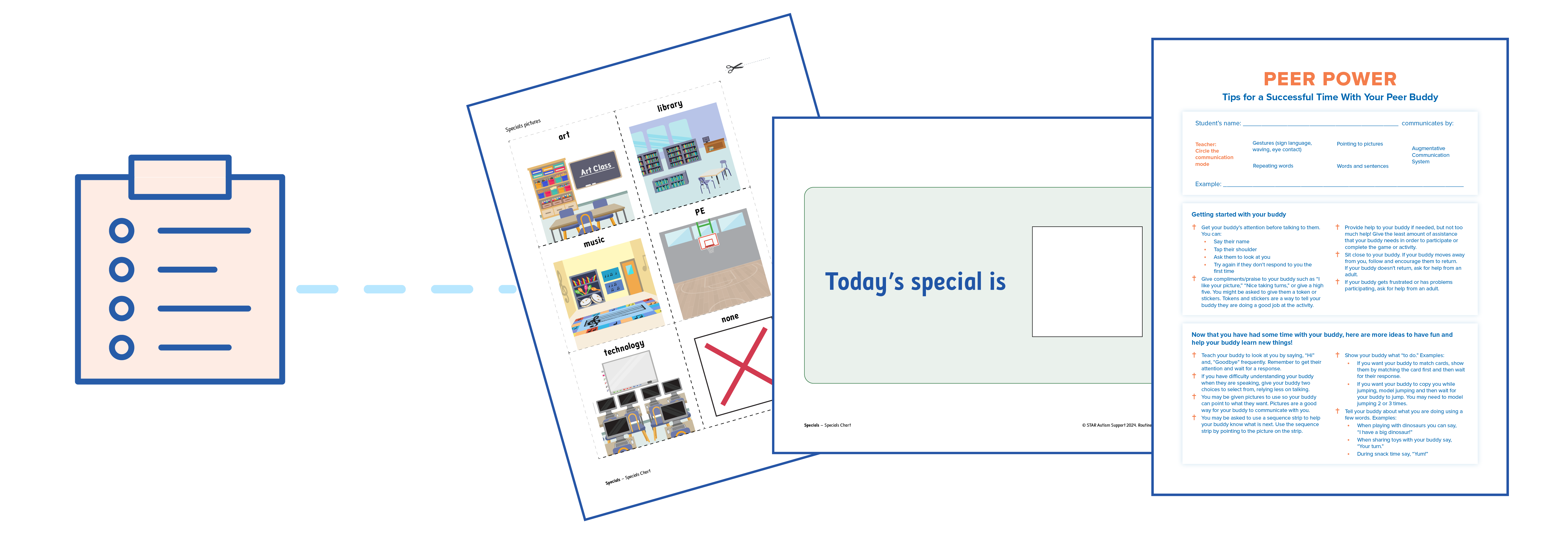
- Set up a peer buddy structure and give participating peers real guidance. The Peer Buddy Guide (English | Español) walks peers through getting a buddy’s attention, offering praise, giving just enough help, and using pictures or a sequence strip to communicate. A few things that make peer buddy programs work:
- Recruit volunteers from general education—same age or slightly older, and always on a voluntary basis.
- Schedule a handful of shared activities across the year: a lunch game time, an ice cream party, a class project.
- Name the specific moments for interaction—recess, free time, walking to specials together, a hallway high five—rather than leaving it open.
- Specials classes are natural ground for peer connection. Pair the Peer Buddy Guide with the Routine Essentials Specials Chart (English | Español) so students know what to expect that day.
Practice Together: Turn-Taking and Play
Play is where most peer skills are actually rehearsed. Sharing materials, waiting for a turn, following someone else’s idea, and contributing your own are all skills that transfer directly into friendship. Visual supports make them concrete.
- Guide turn-taking with the Routine Essentials Turn-Taking Chart (English | Español). Fillable name and picture cards let students see who is going first and who is waiting.
- Give imaginative play a shared script with the SOLER Imaginative Play Sequence Strips — the spaceship strip turns a couch or a big box into a scene two students can build together.
- Make peer interaction a goal you track, not an outcome you hope for. Use pivotal response training (PRT) tools alongside the fillable PRT Goals Form (English | Español) to name language and play targets and monitor progress.
- Know what motivates each student before you ask them to work with a peer. Reinforcement inventories (English | Español) help teams shape emerging social skills and celebrate progress.
- Recess is prime social time, and a routine-based approach lets students access it predictably—rehearse the routine before they need it.
A Quick Check on What Is Working
EARLY IMPLEMENTATION CHECK-IN
Early in the year, adjustments are still small and inexpensive. This is the best window to look honestly at how implementation is going and address areas that need additional support before habits form. Walk through these four questions with your team:
- Are routines running the same way across every adult in the room?
- Is every student getting structured peer time, or only the students who seek it out on their own?
- Which visual supports are actually in use, and which are still in the drawer?
- Do caregivers have the same language and visuals you are using at school?
Share your classroom schedule, peer-connection visuals, and reinforcement strategies with families so the routines students are learning at school get reinforced at home. Caregivers can also use the All About Me worksheet (English | Español) to pass along what has changed since the start of the year.
Need a second set of eyes on your implementation? Let's set up an early-year check-in.
We're here to help.
Ready to talk about building peer connection into your program? Contact us to discuss options!
Each month you'll receive:
Free, ready-to-use classroom resources
Expert tips and implementation strategies
Practical ideas to increase student engagement and learning